- AcademicsDegree TypeLocations
- Admissions
- Tuition & Aid
- Student Life
- About UNT
- Research
- Athletics
- Giving

Student Portraits Data Symposium
Student Portraits Data Symposium
April 30, 2026
The Student Portraits Data Symposium is an opportunity for UNT faculty, staff and
students to come together and share strategies, tools and stories that demonstrate
how we use data to enrich learning and support student success. The 2026 theme, "Recognizing
Every UNT Community Member as an Educator," was inspired by Look North: UNT 2030 and its vision that every interaction with a student has transformative potential.
This event is free and open to faculty, staff and students.
Visit the UNT Digital Library's 2026 SPDS Repository to see posters and presentations.
Keynote Sessions
Building Champions and Preparing Leaders
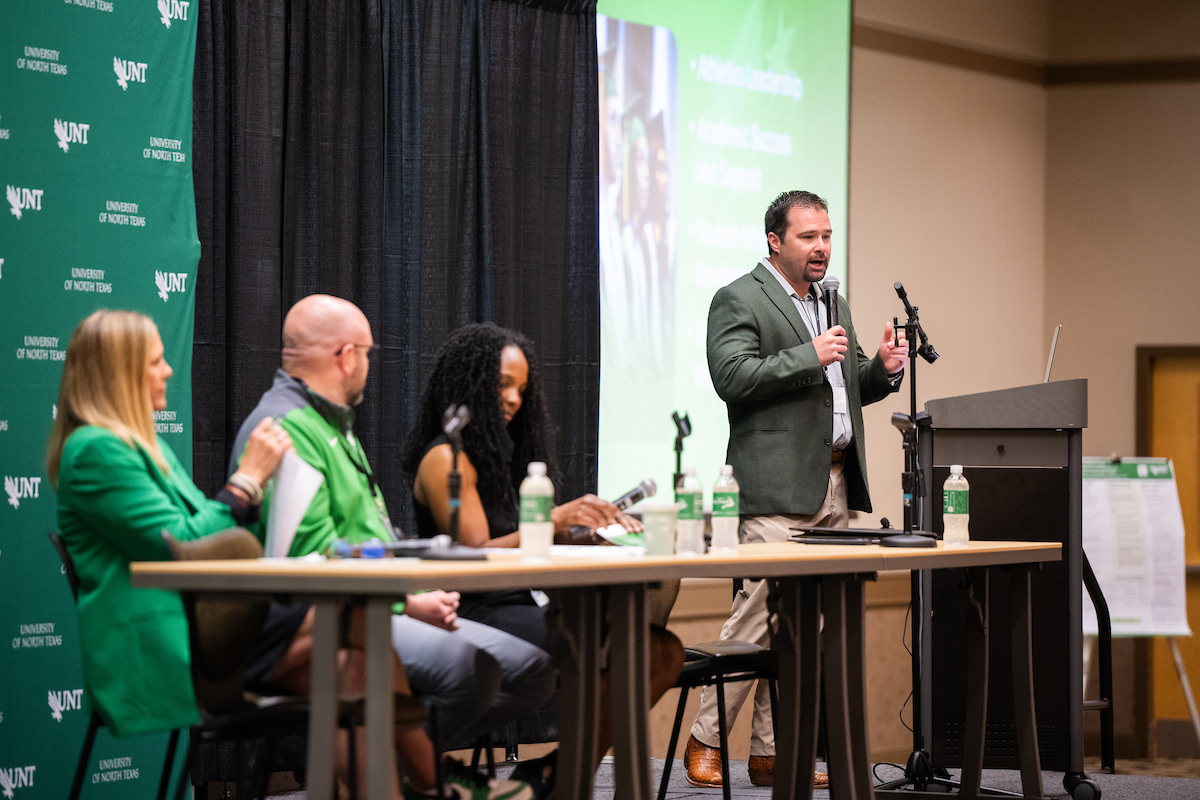 This session showcased how UNT Athletics is redefining student-athlete success through
a holistic approach that extends far beyond the field of competition. By prioritizing
intentional student-athlete leadership development, academic support, mentorship and
comprehensive wellness, Mean Green Athletics equips student-athletes to thrive academically,
personally, and as leaders.
This session showcased how UNT Athletics is redefining student-athlete success through
a holistic approach that extends far beyond the field of competition. By prioritizing
intentional student-athlete leadership development, academic support, mentorship and
comprehensive wellness, Mean Green Athletics equips student-athletes to thrive academically,
personally, and as leaders.
Following the department’s highest semester GPA in program history, UNT Athletics remains committed to delivering a first-class student-athlete experience while advancing their mission of Building Champions and Preparing Leaders.
Presenters:
- Dr. Connor Smith, Associate Vice President and Chief Operating Officer
- Heather Jenkins, Executive Senior Associate Athletic Director for Leadership and Culture Development
- Suzanne Dickenson, Senior Associate Athletic Director for Academic Services
- Jeff Smith, Senior Associate Athletic Director for Sports Medicine
LEEF: The Roads to Student Success
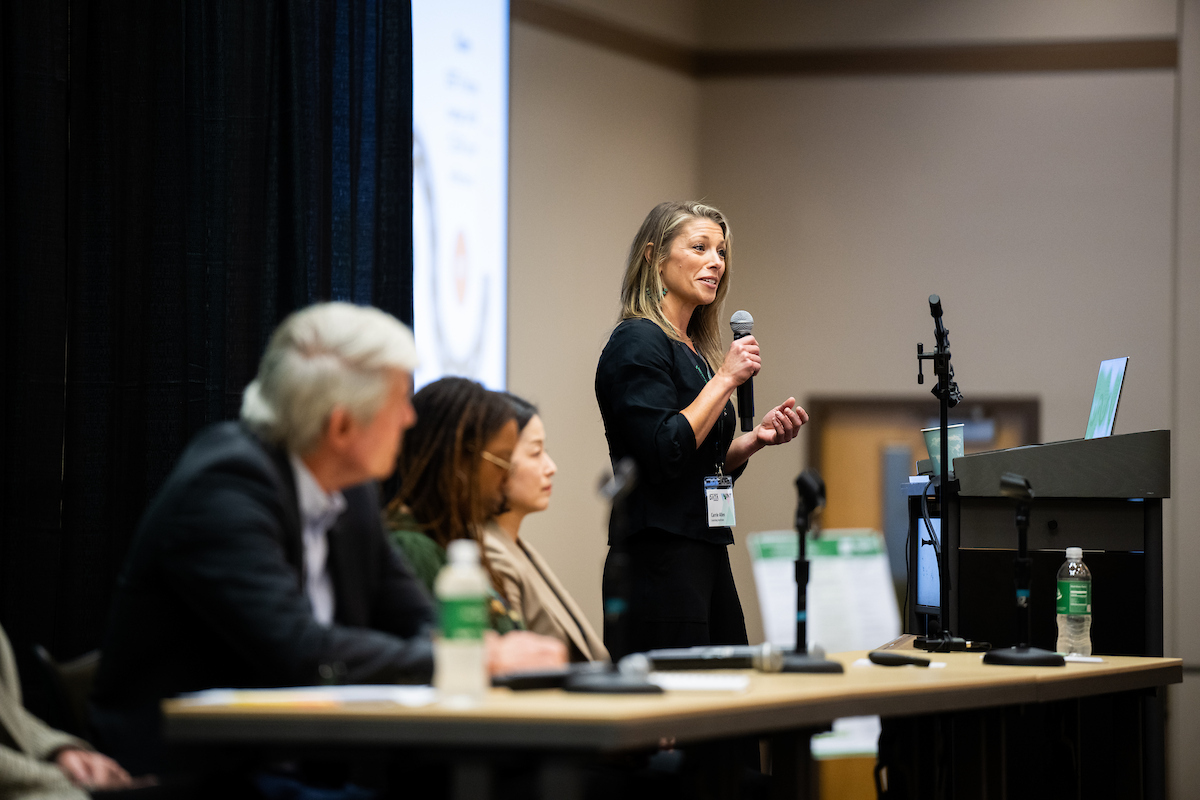
LEEF’s first year has laid critical groundwork for advancing student success through collaboration, innovation, and shared purpose. This session introduced the Learning Ecosystem for Empowering Futures as a road trip toward impact, highlighting unit-level initiatives, pilot projects and engagement opportunities across teaching, research and curriculum. Through interactive reflection, participants identified their own on-ramp into LEEF and explored how they can contribute to cultivating a thriving learning ecosystem.
Presenters:
- Dr. Amy Petros and Dr. Kathy Raign, Co-Directors of the Teaching Hub
- Dr. Carrie Allen and Dr. Yunjo An, Co-Directors of the Learning Institute
- Dr. Michael Monticino, Executive Co-Director, and Dr. April Prince, Co-Director of the Curriculum Connector
Recommendations by Students on Improving the UNT Student Experience
From December 2025 to February 2026, the Division of Student Affairs polled current students about their current and ideal student experiences at UNT. In this session, student researchers and leaders at UNT briefly reviewed poll findings and invited participants to engage with the data and explore how each one of us can improve the UNT experience.
Presenters:
- Dr. Sheila Bustillos, Director, Student Affairs Assessment
- Kaitlyn Adamason, Senior, Mathematics; Student Data Analyst with Student Affairs Assessment; Student Assessment Challenge Participant
- Abena Koranteng, Doctoral Student, Educational Psychology; Student Assessment Challenge Participant
- Terrod Shelton, Senior, Supply Chain Management; Student-Parent Researcher for UNT Urban Institute Partnership
- Ja’Miya Scott, Senior, Industrial Distribution; DSA Student Executive Committee for Strategic Planning
Breakout Sessions
Teaching, Course Design and Instructional Innovation
Pedagogy, course design and faculty/community practices as shared educational efforts
Collaborate and Connect: Active Learning by Design
Kelly Perez, MPH, M.E.d., Lecturer, Kinesiology Health Promotion and Recreation
Tama Herbert, Educational Technology Trainer, Strategic Educational Alliances
Drawing on public health insights that highlight social connection as a key contributor to mental and physical health, this session demonstrated how structured peer interaction can reduce isolation, support belonging and create healthier learning environments. Participants examined practical approaches that cultivate meaningful student-to-student and teacher-to-student relationships while enhancing communication and teamwork, two essential career-readiness competencies. Attendees left with adaptable strategies for integrating social connection into course design, helping students thrive both academically and personally and preparing them for the collaborative demands of today’s workforce.
Human-Centered Skills: Using Active Learning to Bridge the Leadership Gap
Christy Crutsinger, Ph.D., Distinguished Teaching Professor, Merchandising and Digital Retailing
Tania Heap, Ph.D., Sr. Director, Learning Research and Accessibility, Strategic Educational Alliances
Audon Archibald, Ph.D., Data Analyst, SEA Learning Analysis and Digital Research Center
As AI and automation reshape the modern workplace, human-centered communication skills remain urgently important. This session presented findings from a two-semester mixed methods study (Spring and Fall 2025) examining how active learning strategies in undergraduate leadership courses influence student engagement and soft skill development. Strategies included meeting simulations, case studies, role plays, active listening activities and peer collaboration. Attendees gained practical models for teaching communication skills, insights into measuring soft skill growth and a framework for integrating experiential learning into leadership curricula.
Classroom Design, Syllabus Features and Accessibility Levers that Improve Retention
Thomas Trebat, Graduate Research Assistant/Data Analyst Intern, SEA LADR
Natalie Brown, Undergraduate Research Assistant/Data Analyst Intern, SEA LADR
Quentin Smith, Undergraduate Research Assistant/Data Analyst Intern, SEA LADR
Audon Archibald, Ph.D., Data Analyst, SEA LADR
Tania Heap, Ph.D., Sr. Director, Learning Research and Accessibility, SEA Learning Analysis and Digital
Research (LADR)
This session shared a three-year, multivariable analysis linking course design and operational factors to DFWI and retention. Using a university-wide dataset plus classroom technology tiers, presenters showed how enrollment, meeting frequency, duration, start time, day patterns and room fullness relate to As, Cs, Fs and DFWI rates. They then extended the model with new lenses: (1) syllabus-level retention rankings (top 10 and bottom 10 courses) and (2) campuswide course accessibility scores from Ally in Canvas. Participants left with a replicable analytic framework and considerations for possible high-yield interventions for campus reporting that blend institutional research, accessibility and classroom design data.
Teaching Hub Educator Outreach Initiative
Kathryn Raign, Ph.D., Co-Director of the LEEF Teaching Hub
On September 23, 2024, President Keller charged the Student Success Scan project team with quickly assessing the progress of student success efforts to inform long and short term strategies for improvement at UNT. The scan identified several instructional challenges: limited resources and support for faculty development; an evaluation structure that discourages instructional innovation; insufficient assistance for new faculty; and student reports of unresponsive instructors, outdated materials and ineffective teaching methods. Students expressed a desire for more engaging, adaptable instruction, while many faculty feel under-prepared for the level of support students need.
In this workshop, Teaching Hub members introduced the Educator Outreach Initiative, designed with the understanding that teaching is a complex human activity and that even skilled educators can grow through study, practice and collaborative support.
UDL at UNT: Advancing Accessibility, Faculty and Staff Support, and Title II ADA Readiness
Benjamin Brand, Ph.D., Interim Executive Director, CLEAR, Strategic Educational Alliances
Tania Heap, Ph.D., Sr. Director, Learning Research and Accessibility, Strategic Educational Alliances
As institutions prepare for strengthened Title II ADA requirements, the University of North Texas has launched UDL@UNT, a campuswide initiative designed to build faculty and staff capacity in learner centered, accessible design. Grounded in the Universal Design for Learning (UDL) framework, the presentation introduced UDL’s history, structure and evidence-based impact on student engagement and persistence. It then highlighted UNT’s new UDL Resource Hub, which provides adaptable materials, discipline-specific guidance and on-demand support to reduce barriers without increasing workload. Finally, the session shared early findings from an analysis of Anthology Ally data across 23,000 Canvas courses, revealing how course size and accessibility interact to influence student success and retention outcomes. Results show accessibility improvements are especially protective in large enrollment courses, validating UNT’s combined strategy of UDL-aligned professional development and campuswide accessibility planning.
Data, AI and Evidence as Shared Educational Tools
Data-driven insights and methods empowering all community members as educators
Adapting to Innovation: An AI Framework
Michelle Singh, Ph.D., Vice President for Strategic Educational Alliances
James Garrison, M.A., Chief Information Officer
Artificial intelligence is the latest in a series of transformative innovations reshaping higher education. Rather than treating AI as a singular disruption, UNT is developing a broader institutional framework that draws on lessons from previous technological shifts to navigate innovation with clarity, responsibility and shared purpose. Drawing from institutional data, prior innovation cycles and cross-divisional collaboration, presenters outlined guiding principles for responsible adoption, structured experimentation, governance and workforce alignment. Attendees gained practical insight into how data-informed decision-making and shared institutional values position UNT to move beyond reactive responses to AI and toward a sustainable, student-centered culture of innovation.
Engaging Ethical AI Integration: Best Practices for Instructor Development and Student
Success
Stephanie Vastine, Ph.D., Senior Lecturer, English
Brian Anderson, Ph.D., Senior Lecturer, Music History Pedagogy
This session showcased how the UNT Teaching Hub’s AI Community of Practice (AI CoP) is cultivating collaborative, student-centered approaches to integrating generative AI in the classroom and encouraging instructor learning and experimentation with AI. Participants learned how AI CoP members use and share data, design ethical and transparent policies and implement assignments and practices that reflect the new reality of an AI-driven world. They also gained practical tools for incorporating AI in their own work based on the AI CoP’s anecdotal and empirical data. While much of the session focused on the AI CoP’s initial steps, the session closed by looking forward to future possibilities for embracing emerging technologies.
From Insights to Action: Using Student-Centered Tools to Drive Decisions
Stacey Polk, M.Ed., Student Success Program Manager, Student Initiatives
This session provided an overview of UNT’s cross-functional student journey mapping initiative, grounded in the belief that everyone is an educator. Drawing on institutional data and student voice, the project uses personas and validated journey maps to better understand how students experience the university from admission through early career outcomes. The session highlighted how these student-centered approaches illuminate key touchpoints, reveal coordination gaps and identify opportunities for improvement across campus. Attendees left with ideas for leveraging these tools to strengthen collaboration, align processes with students’ lived experiences and advance retention and success.
From Respondents to Researchers: Students as Analysts of the UNT Experience
Shelia Bustillos, Ph.D., Director, Student Services Assessment
Shafayat Islam, M.S., Assistant Director, Student Services Assessment
Sam Williamson, M.A., Assistant Director, Student Services Assessment
Large-scale surveys often position students as respondents. This session highlighted what happens when students become researchers. Using data from the SERU (Student Experience in the Research University) survey at UNT, student participants in the UNT Student Research Challenge analyzed key findings and identified the most pressing themes shaping the student experience. Attendees heard directly from student researchers about what they discovered and why it matters. The session then shifted from insight to action, inviting participants to engage with top SERU findings and collaboratively generate institutional responses. This interactive session modeled a student-centered approach to assessment, demonstrating how survey data can move beyond reporting to inform design, partnership and meaningful change.
From Anxiety to Agency: Growing Faculty Confidence and Teaching Skills Around AI for
Student Success
Allison Boye, Ph.D., Senior Faculty Development Specialist, Strategic Educational Alliances
This session presented findings from GAIT (the Generative AI Institute for Teaching), a semester-long, research-based professional development program designed to help faculty integrate generative AI transparently, ethically and in support of student success. As GenAI tools reshape higher education, many instructors experience uncertainty about using them effectively. GAIT addresses this challenge through a structured, community-oriented model that combines asynchronous modules, hands-on experimentation, guided reflection and synchronous cohort discussions. This session shared program data, participant reflections and examples of AI-integrated teaching practices along with interactive activities modeling GAIT strategies, offering attendees practical insights for cultivating informed, confident AI engagement that advances student learning and success.
Better Together: A Data-Driven Scavenger Hunt for Building Communities of Practice
Amy Petros, Ph.D., Co-Director of the LEEF Teaching Hub
Kathryn Raign, Ph.D., Co-Director of the LEEF Teaching Hub
Yolanda Mitchell, Ph.D., Senior Faculty Developer for the LEEF Teaching Hub
The Teaching Hub Community of Practice (CoP) model brings together educators across UNT — faculty, staff and graduate students — to collaboratively design and enact interventions that drive meaningful gains in student success. This workshop introduced participants to how the Teaching Hub supports the creation of these cross-role CoPs by grounding collaborative inquiry in data, evidence and shared purpose. The session began with an interactive data scavenger hunt that inspired curiosity and built a collective understanding of student needs and institutional opportunities. From there, teams worked together to articulate an evidence-based challenge or opportunity statement, draft preliminary inquiry questions, identify additional data required and map potential partners or offices essential to a successful CoP. By the end, participants experienced firsthand how the Teaching Hub cultivates an environment where diverse educators unite to explore problems, test ideas and shape solutions that enhance teaching, learning and student achievement across UNT.
Mapping the Academic Acceleration Ecosystem: Longitudinal Analytics for Student Momentum
and Belonging
Mai W. Zaru, Ph.D., Program Project Coordinator, TRIO Upward Boun
This session introduced Ecosystem Mapping, a longitudinal analytic framework that models how mentorship, engagement, belonging and academic performance redistribute across developmental stages. Using multiyear Upward Bound data, presenters integrated academic indicators, engagement intensity, mentorship frequency and perceived impact, connectedness and transition experiences into stage-specific ecosystem visualizations. Rather than reporting static performance metrics, this model identifies support centrality shifts, transition vulnerabilities and leverage points across pre-college and early college phases. Participants examined a piloted composite ecosystem scoring, transition inflection detection and cross-unit data alignment strategies that move institutions from descriptive dashboards to predictive, design-oriented analytics.
Pathways, Belonging and Student-Educator Partnerships
Programs fostering belonging, retention and career trajectories as collaborative education
Strengths of Looking North: Utilizing CliftonStrengths to Elevate Student Skills and
Career Readiness
Philip Aguinaga, M.A., Assistant Director of Advising, College of Merchandising, Hospitality and Tourism
Anna Motes, M.S., Career Coach for the College of Information, Career Center
DrewAnn Reyes, M.S., Assistant Director, Transition Programs, Orientation and Transition Programs
This learning session explored how UNT’s growing use of CliftonStrengths provides a common language for student self-awareness, applied learning and evidence-based career readiness. Presenters shared UNT-specific data, student impact stories and research literature demonstrating how strengths-based development improves communication of skills in both academic and professional contexts. Attendees learned how the Strengths Ambassador program, campuswide workshops and individual appointments help students articulate talents using language that aligns with employer expectations. The session offered practical, replicable models that staff and faculty across UNT can meaningfully integrate into their courses, advising, student employment and departmental initiatives.
A Look at the Bigger Picture Facing UNT Students: Lessons from the Texas General Education
Committee
Courtney Glazer, Ph.D., Director of the Core at UNT
The Texas General Education Committee (GEC) was formed in October 2025 with a charge based on SB 37 to review and recommend updates to the Texas Core Curriculum. In its work, the committee has looked at reasons why the core looks like it does today, issues related to transfer applicability and the workforce landscape including the needs of employers. This session shared data from the GEC's work that is relevant to UNT's undergraduate students and their pathways in and out of the university as well as key tensions relevant to the work of revising the Texas Core Curriculum at the state level and for UNT.
Belonging, Achievement and Retention: The Honors College Impact on High-Achieving
Students
Sean Ryan, Ph.D., Associate Dean, UNT Honors College
Lizette Ozog, M.E.d., Assistant Dean of Advising, UNT Honors College
Michael Forst, M.A., Assistant Director of Student Life, UNT Honors College
High-achieving students often leave universities not because of academic struggle, but because they lack meaningful connections and a sense of belonging at the institution. This session explored how the UNT Honors College supports high-achieving students through broader, deeper academic experiences paired with structured co-curricular engagement.
Aligning Curriculum and Career Pathways: Insights from the Curriculum Connector and
English Department Pilot
Michael Monticino, Ph.D., Co-Director of the LEEF Curriculum Connector
April Prince, Ph.D., Co-Director of the LEEF Curriculum Connector
This session introduced a pilot collaboration between the Curriculum Connector in UNT's Learning Ecosystem for Empowering Futures (LEEF) and the Department of English. Attendees got a high-level look at how the project examines student pathways drawing on enrollment patterns, retention trends and emerging career trajectories to better understand how the English curriculum supports student goals. The session highlighted early insights from a mixed methods approach and demonstrated how integrating student data with stakeholder feedback can inform curriculum planning and strengthen career preparation across academic programs.
Encouraging Graduate Student Connection and Participation Using the Glenn and Ellis
Mentoring (GEM) Program
Sam Bergmann, Ph.D., Associate Professor, Behavior Analysis
Shahla Ala’i-Rosales, Ph.D., Professor, Behavior Analysis
David Morales, Master's Student, Behavior Analysis
The Glenn & Ellis Mentoring (GEM) Program, named in honor of founding professors Drs. Sigrid Glenn and Janet Ellis, was created for Master of Science students in the Department of Behavior Analysis. GEM is designed to equip new master's students with the initial tools, experiences and connections to help them create community and be successful. It is formally structured within a practicum course overseen by the M.S. graduate advisor. Activities were selected to encourage students to connect with their cohort members, foster connection with other graduate students and faculty members, contact resources at UNT, make time to meet with the M.S. graduate advisor and attend research labs in the department. Participation in the activities was documented on a GEM card on which the students record activities and earn points. Presenters reviewed the program, provided data on student satisfaction and shared a student’s perspective.
From ENGAGEment to Empowerment: Outcomes of the UNT WISE ENGAGE Program
Jade Marth, M.Ed., Sr. Program Project Coordinator, UNT WISE ENGAGE
Kellie Nix, M.S., CRC, LPC, Associate Director, UNT WISE ENGAGE
Kaiqi Zhou, Ph.D., CRC, Assistant Professor, Rehabilitation and Health Services; Research Collaborator for
UNT WISE
Lucy Gafford, M.S., CRC, Director, UNT WISE
This presentation provided an assessment of the UNT WISE ENGAGE program, focusing on its core objectives, implementation strategies and measured outcomes. It examined how the program supports student engagement, academic persistence and professional development among the neurodivergent student population at UNT. Using program data, participant feedback and outcome metrics, the presentation evaluated the program’s effectiveness and highlighted key successes, areas for improvement and insights to inform future program development and sustainability.
Poster Session
Teaching, Course Design and Instructional Innovation
Building Faculty Capacity for Innovation: Using Faculty Voice to Address Student Engagement
Gaps
Jae Webb, Ph.D.
Clinical Associate Professor, Management
This session presented findings from a comprehensive needs assessment examining faculty development gaps that impact student success. In Fall 2025, over 500 faculty and staff responded to a survey about their professional development needs as they relate to supporting student learning. Key findings reveal strong demand for training in student engagement strategies, evidence-based teaching methods and strategies for bridging generational gaps, with follow-up focus groups exploring these barriers in depth. The presentation shared how these data are informing the design of new Communities of Practice and faculty development initiatives, with particular emphasis on high-demand areas like AI integration, project-based learning and inclusive pedagogy. Attendees learned meaningful strategies for translating faculty voice into actionable programming that builds teaching capacity.
Foundations of Biology: An off-ramp and on-ramp course
Lisa Welch, Ph.D., Senior Lecturer, Biological Sciences
Ann Price, Ph.D., Lecturer, Biological Sciences
This poster session provided an overview of UNT’s Foundations of Biology course, which focuses on conceptual clarity, skill-building, active engagement and targeted remediation to dramatically improve student readiness for biology majors. The key is aligning instruction with the specific knowledge gaps of under-prepared students.
Meeting Students Where They Are: Evaluating the Impact of Classroom-Based Advising
Outreach
Abigail Dyer, M.A., Senior Academic Counselor
Chloe Witt, M.Ed., Academic Counselor
In Fall 2024, Advising Services launched a classroom visit campaign in targeted high enrollment courses such as history, government, biology, chemistry, math and English to share information on the role academic advising plays in student success at UNT. These visits presented information on the benefits of early academic advising and how students can connect with their advising team, with a goal of increasing early academic advising appointments and registration. This presentation explored the effectiveness of this intervention and how, with greater cross-campus collaboration, it can be implemented at scale.
Looking North Toward Confidence: Findings from the Personal Report of Communication
Apprehension in Project-Based Learning Contexts
Christina Ross, Ph.D., Clinical Associate Professor, Multidisciplinary Innovation
This presentation shared pre- and post-test results from the Personal Report of Communication Apprehension in interdisciplinary, project-based learning communication courses at UNT. The PRCA measures students’ perceived level of anxiety when communicating in group, meeting, interpersonal and public speaking contexts. Results indicated statistically significant differences in communication apprehension, particularly for public speaking and for cohorted sections. The presenter shared how systematic desensitization and a scaffolded project-based approach to course design can contribute to lower levels of communication apprehension and increased confidence in students.
“But What Can I Do with That?” Perceptions of “Transferable Skills” in the Humanities
Jakob Burnham, Ph.D., Director of the Lab for Engaged, Applied, and Public Humanities (LEAPH) and Clinical Assistant Professor of History
This session shared the results of the history department’s efforts to evaluate student perceptions of course learning objectives as they relate to career preparedness. The research was conducted by integrating a new informational module, “History and Careers,” into the U.S. History Survey, which allowed data to be collected from students across the university. The module served two purposes: to dispel students’ preconceived ideas about the career outcomes of humanities majors and to inform them about trends in employment criteria. Students were then asked to report their perceptions of which employment criteria their history courses developed most directly. These results were analyzed to identify areas for potential improvement in the development of underrepresented transferable workforce skills.
Data, AI and Evidence as Shared Educational Tools
Demonstrating the Effectiveness of Academic Retention Programs for First-Generation,
Low-Income and Students with Disabilities
Detra Craig, M.Ed., Director, TRIO Student Support Services
Anthony Vazquez, M.Ed., Assistant Director, TRIO Student Support Services
This poster session demonstrated the impact of TRIO Student Support Services on the retention, persistence and graduation outcomes of qualifying undergraduate student participants at UNT. TRIO Student Support Services is designed to increase the number of low-income and first-generation students and students with disabilities who complete a bachelor's degree. In accordance with U.S. Department of Education requirements, TRIO SSS provides academic tutoring, course registration assistance, financial aid support, financial literacy services and graduate and/or professional school preparation. Through a holistic service model and approach, TRIO SSS supports institutional student success and retention and graduation goals by providing services and co-curricular learning and engagement opportunities for academic, personal and professional development.
Identifying the Advising Needs of Early College Students via Exit Interviews
Francine Hazy, M.S., Senior Academic Counselor
An academic counselor conducted exit interviews with TAMS students during their last semester prior to graduation. These interviews guided students to reflect on their experience and to share feedback staff could use to assess policies and better support future students. Notes from these interviews were organized to identify recurring themes and share feedback with relevant teams within TAMS. Since then, the exit interview feedback has been applied when making decisions about Orientation and Preview Day presentations, TAMS Handbook policies, Early Start and academic advising practices.
Turning Inclusion into Evidence: Data-Informed Mentoring for Student Well-being and
Success
Hsin-Hsuan Chung, Graduate Student Assistant
Junhua Ding, Ph.D., Professor of Data Science
Kewei Sha, Ph.D., Associate Professor of Data Science
This presentation introduced a scalable and equity-minded approach to strengthening students’ sense of purpose, belonging and well-being through data-driven mentoring. By conducting brief pulse surveys and pairing the results with routinely available engagement indicators, the project aims to demonstrate how analyzing change over time and reporting by subgroup can reveal hidden inequities, then show how student voice helps interpret results and shape targeted mentoring responses. Attendees left with an adaptable template for implementing the approach and translating findings into concrete improvements in student support.
Demonstrating the Value of Study Abroad through strategic data collection
Haley Arnold, Assistant Director, International Education Program
This poster presentation highlighted the data collection practices of the Study Abroad Office and how intentional program assessment demonstrates the outcomes of study abroad on students' academic journeys and career readiness. Attendees gained insight into SAO's growth-oriented and value-driven approach to assessments, including how data is collected, analyzed and translated into actionable program improvements. The session showcased how study abroad functions as a high-impact and engaging learning experience and how data findings are used to strengthen program design, enhance student support and inform new program initiatives.
Library Promotional Campaigns: Usage Before and After
Apurwa Bhattarai, Master's Student, Information Science; Graduate Services Assistant, UNT Libraries
UNT Libraries hosts various promotional events, but there aren't enough metrics to measure if those events were effective. This project helped library staff assess the effectiveness of the campaign by analyzing the materials checkouts before and after the campaign. Similarly, the dashboard also helps analyze trends of the checked-out materials.
Driving Curricular Change and Innovation in Teacher Education Programs Utilizing the
Institutional Effectiveness Reporting Process
Ranita Cheruvu, Ed.D., Lecturer and Program Coordinator of M.S. in Early Childhood Education
Nazia Khan, Ed.D., Associate Chair of B.S. in Education, Principal Lecturer
Tori Smith, Ph.D., Lecturer and Lead for Institutional Effectiveness Report for Teaching M.Ed. Program
In this session, presenters shared how they utilize UNT’s Institutional Effectiveness reporting process to guide meaningful curricular changes and foster innovation. Through systematic data collection and analysis, stakeholder feedback and outcomes evaluation, they identify strengths, address gaps and align programs with current educational standards and best practices. This evidence-based approach supports continuous improvement and allows faculty to make informed decisions that enhance student learning, improve field experiences and strengthen instructional strategies. By leveraging assessment results and graduate performance data, presenters aim to design curricular and program structures that remain relevant, rigorous and responsive to the evolving needs of diverse UNT students and the children they serve.
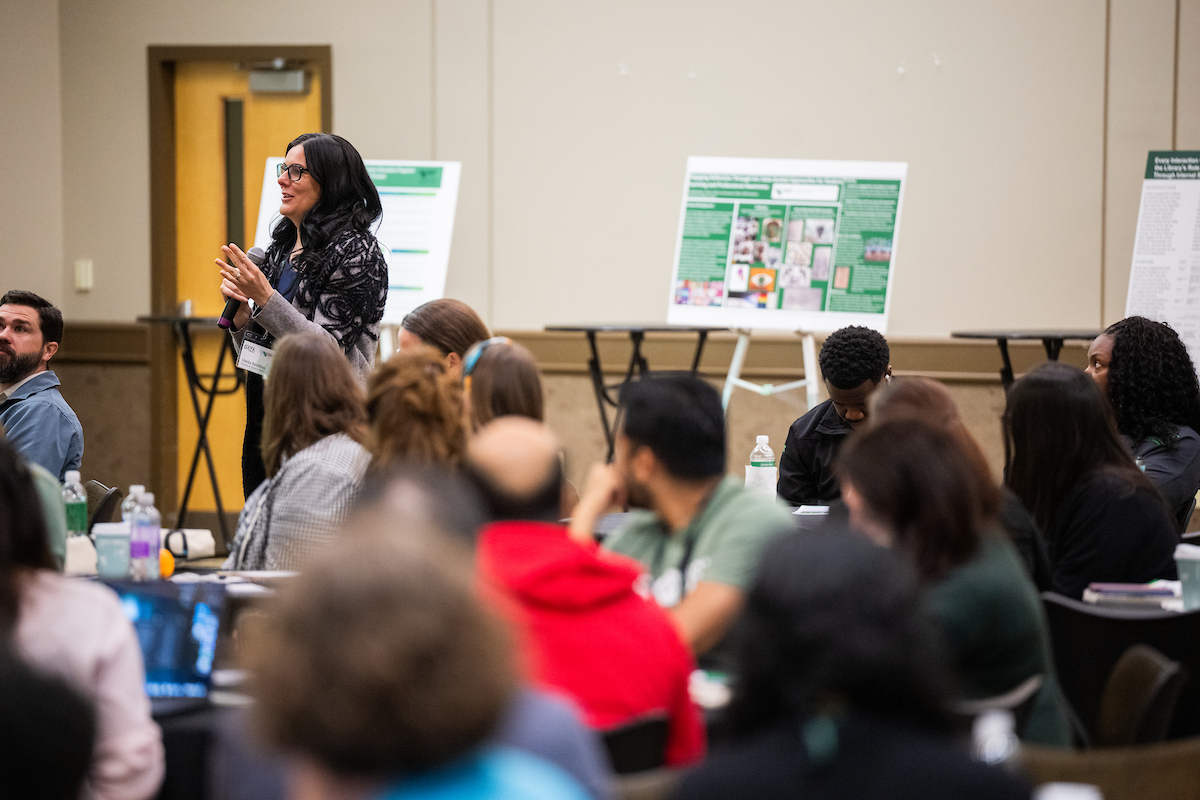
Every Interaction Counts: Exploring the Library's Role as Educator Through Internal
Service Data
Janelle Foster, M.S., Department Head, Access Services, UNT Libraries
Jen Rowe, MLS, Department Head, Branch Libraries, UNT Libraries
Amanda Zerangue, M.S., Associate Librarian, Public Services, UNT Libraries
Library engagement matters for student success, but how do we show that, and what story does the data tell? This poster presented UNT Libraries Public Services Division's early efforts to examine internal service data as evidence of the division's role in the student journey. Presenters shared what their data suggest so far, where gaps and opportunities are emerging and how they are developing the capacity to use data more intentionally. The goal is not a finished research project but a transparent account of a developing practice, and an argument that every service interaction is an act of teaching worth making visible.
Pathways, Belonging and Student–Educator Partnerships
Develop, Discover, Drive: How Data Shaped My Interdisciplinary Career Path
Liyu Yang, Ph.D. Candidate in Information Science
This session detailed the presenter’s journey in building a data-driven academic career across tourism and information science at UNT. Rather than viewing data solely as a research tool, Yang approaches it as a guiding mindset — one that has shaped disciplinary growth, broadened research boundaries and redefined long-term career goals. The path unfolds in three stages: developing domain expertise in tourism through qualitative research on traveler interactions with generative AI; advancing into the information science field to explore social network analysis and computational approaches to large-scale social media data; and integrating mixed methods with AI-enabled bibliometric techniques to investigate explainable and responsible AI. This progression demonstrates how data-driven thinking, interdisciplinary mentorship and institutional values can open meaningful opportunities for graduate students to pursue impactful research and career growth.
Reframing the Trend: UNT World Languages Enrollment and Career-Driven Solutions
Jiyoung Yoon, Ph.D., Professor of Spanish, Director of Student Career Development, World Languages, Literatures, and Cultures
This presentation examined enrollment trends among World Languages B.A. majors using fall (census-style) counts from 2018–2025 to ensure accurate year-to-year comparisons based on UNT Insights 2.0 data. Total fall enrollment declined 45.6%, with sharper drops in Spanish, French and German and a post-peak decline in Japanese between 2021 and 2025. The department is taking proactive steps — introducing six new Spanish Professional Certificates, expanding career partnerships through the inaugural Fall 2025 Career Resource Fair and planning Spring 2026 workshops with the UNT Career Center — to advance a career-connected curriculum inspired by Arizona State University’s successful language program model.
Student’s Influence on the Library
Sephra Byrne, Ph.D., Data Analyst, Collection Assessment Department, UNT Libraries
Lidia Arvisu, M.S., Department Purchasing Coordinator, UNT Libraries
Laine Fender, Student Assistant, Assistant Data Analyst, Collection Assessment Department, UNT
Libraries
This presentation examined how UNT Libraries regularly collect student feedback and how that feedback has informed and guided improvements across library services and spaces.
Spectroscopic Insights into Active Supermassive Black Holes: An Application in Mentoring
Student Researchers in Data Analysis, Modeling, and Quantitative Reasoning
Harum Ahmed, Third-year Ph.D. Candidate, Physics
This project served as a platform as an application mentoring students in data analysis, modeling and quantitative reasoning, demonstrating how research environments can function as collaborative learning spaces that support both discovery and student development.
Engaging Reflection Through Art: Data Guided Approaches for Student Learning and Professional
Awareness
Cassidy Baker, Ph.D., LCSW-S, ACSW, Clinical Associate Professor of Social Work, MSW Program Director
Steven Pullin, Undergraduate Student, Social Work
This poster presented an arts-based pedagogical approach to social work education that integrates creative assignments, such as “unessays” and arts-informed field journals, to deepen student engagement and promote meaningful professional development. These multimodal strategies support students in processing complex internship experiences, navigating value tensions and cultivating self-care, aligning with the National Association of Social Workers Code of Ethics. Implemented across undergraduate ethics courses and undergraduate and graduate field seminars, these assignments foster insight, creativity and reflective practice. Preliminary feedback indicates increased engagement, richer narratives of practice and greater inclusion as students express identity and perspectives through creative formats. The session was co-presented by a faculty member and a social work student who shared lived experiences, benefits and lessons learned from these approaches.